I Found ChatGPT Ads Easy to Ignore but Hard to Unsee

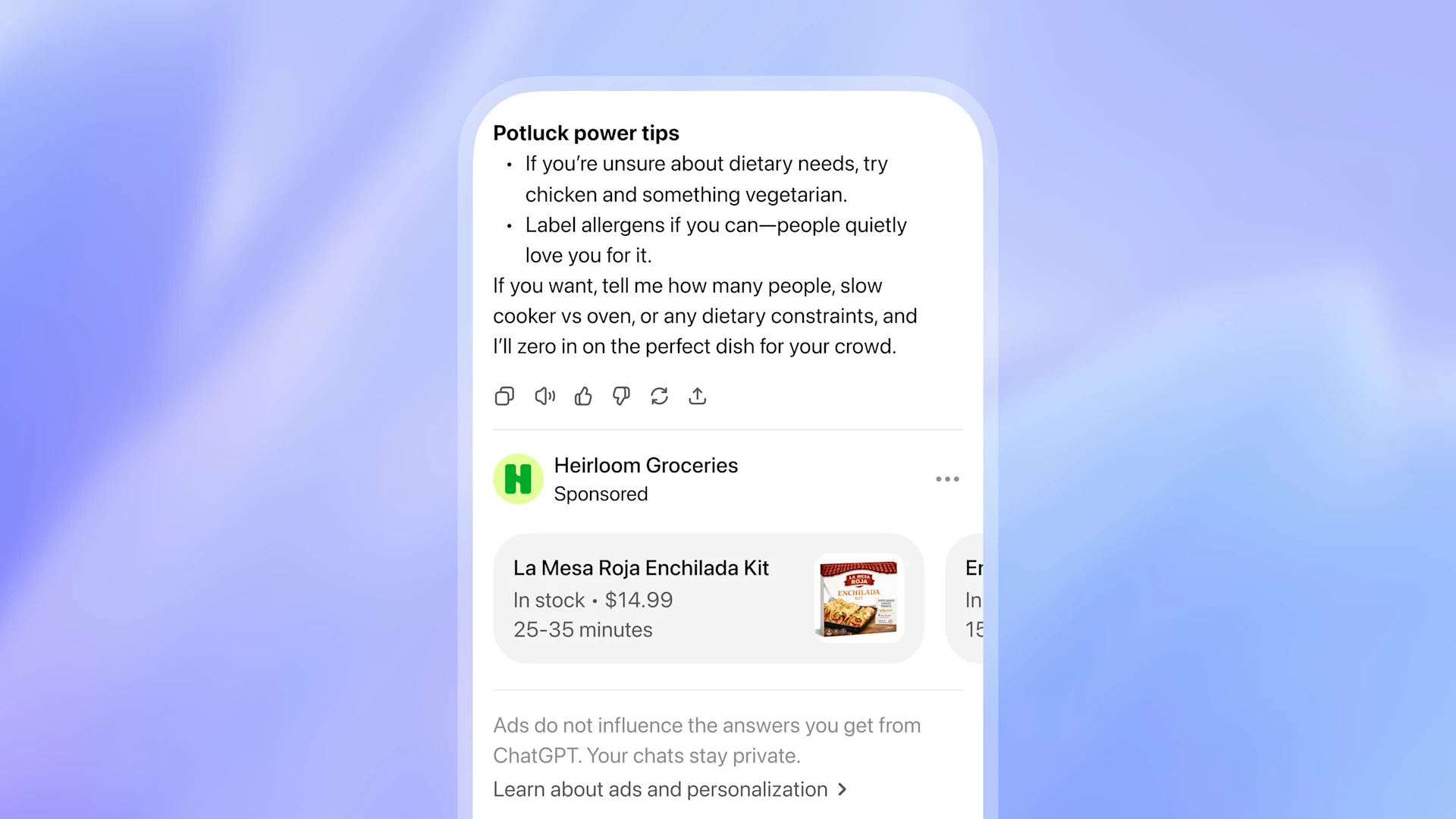
OpenAI has started testing Ads in ChatGPT for Free and Go users in the U.S., and the first thing that struck me is how quiet the change is meant to be. The ad unit is designed to live after the answer, not inside it, and OpenAI says ads are clearly labeled, visually separated, and don’t influence responses.
As a piece of UI, I found the idea surprisingly polite. If ads stay below the reply, as they are, you can finish your thought and move on without the conversation getting hijacked mid-sentence. The best version of this experience feels like a footer you can ignore, and not a detour you’re forced to take.
Then the real effect kicks in. I found myself imagining how quickly this changes the way you read the answer. Once money enters the frame, you not only evaluate the information, but also evaluate the incentive. Google Search has already trained people to expect a marketplace and Chat has trained people to expect a helper. Even with a clean label, sponsorship changes the mental contract of how it feels.
If you use ChatGPT for decisions, this becomes a boundary test. The only thing that matters is whether the assistant keeps a hard wall between "answer" and "influence," because that wall is what makes the product readable. The moment anything sponsored starts shaping the wording of the response itself, trust won’t degrade gradually, it’ll snap.
My verdict is conditional. I found bottom-of-answer that ads are tolerable, for now, but they introduce a trust tax that didn’t exist before. If OpenAI keeps the separation strict, ads stay as background noise. If sponsorship ever leaks into the answer, even subtly, the experience stops feeling like assistance and starts feeling like persuasion.
For now, it’s fine, I guess. But we’ll have to wait and watch where this line moves next.
Y. Anush Reddy is a contributor to this blog.