NVIDIA and Eli Lilly Just Bet $1 Billion on Automating Drug Discovery

The news is simple, NVIDIA is investing $1B in drug research. But the deal NVIDIA and Eli Lilly just announced isn’t so much an investment in research as it is an attempt over the next five years to rebuild the whole process of pharma R&D.
It involves using models, wet lab automation, and compute simulations to create a continuous feedback system where each one improves the other.
They both plan to jointly invest up to $1 billion over five years in an AI drug discovery laboratory focused on talent, infrastructure, and resources in the San Francisco Bay Area. NVIDIA plans to construct the lab based on its BioNeMo and next-generation Vera Rubin platform, signaling that this will be scalable infrastructure, not just a one-off pilot.
The Feedback Loop: Wet Labs Meet Dry Labs
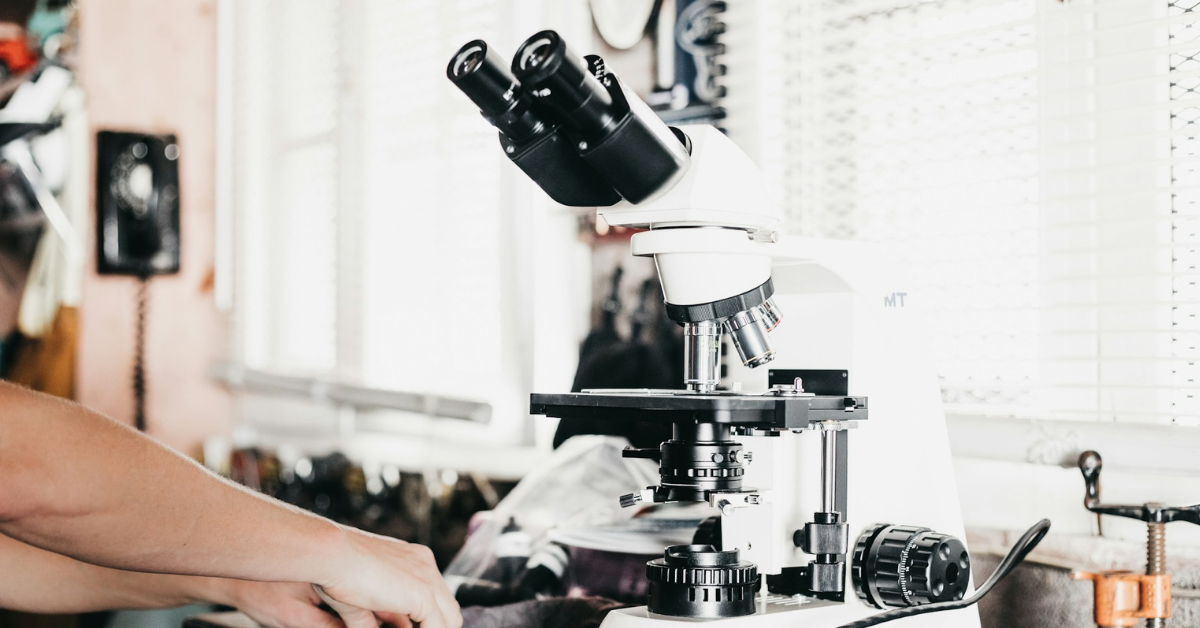
What is new about this is the mechanism they are proposing. They describe a “continuous learning system" that links Lilly’s autonomous lab automation (agentic wet labs) to computational dry labs, enabling research to proceed in a 24/7 cycle with scientists overseeing decisions rather than manually guiding each step.
In real terms, it’s a closed feedback loop where AI models predict drug targets, experimental verification leads to new biological data, and the models retrain. That’s the core bet behind “AI drug discovery” today, the bottleneck isn’t innovation, but quality data.
The Industrial Blueprint
This is where Lilly’s role has the most strategic value. In the pharmaceutical industry, the limit is not imagination, but throughput. Biology is noisy, lab results are expensive, and even the best foundation models falter without new experimental data to validate them.
Lilly hopes to convert its pipeline into a compounding data machine, while NVIDIA hopes that once this workflow is built on its platform, the process becomes reproducible across the industry.
Furthermore, NVIDIA and Lilly describe a scope that goes “beyond early discovery.” They specifically state using AI for the full lifecycle, integrating:
1. Robotics & Agentic AI for physical lab automation.
2. Multimodal Models to process biological and chemical data.
3. Digital Twins for simulating pharmaceutical manufacturing before building.
This is where the Thermo Fisher partnership comes in. On the same day, Thermo Fisher said it will collaborate with NVIDIA to power AI solutions and laboratory automation at scale, connecting instruments, lab infrastructure, and data to AI software to reduce manual steps and speed up labs.
While technically separate, it solves the hardware and workflow problem that often sabotages AI-assisted drug discovery. If the laboratory can’t deliver standardized data quickly, the feedback cycle grinds to a halt. Thermo Fisher sits at the instrument level, providing the actual data plumbing needed to bridge the “wet and dry” separation.
It creates a loop: Nvidia invests in a partner, and that partner spends the money on Nvidia chips. It doesn’t make the science less real, but it shows Nvidia is paying to make sure it stays the industry standard.
What Comes Next in AI for Drug Discovery
The test of this lab isn’t in the top line number; it's in its ability to achieve measurable results that traditional pharma workflows can’t. Look for indicators like accelerated iteration cycles, valid new models trained on fresh data, and demonstrations that lab automation is improving throughput without sacrificing quality.
If NVIDIA and Lilly can show that this concept of “continuous learning” actually works, it becomes the template for the industry. Otherwise, this $1B figure becomes as obsolete as any other marketing statistic.
Y. Anush Reddy is a contributor to this blog.