Jensen puts inference and AI agents at the center of Nvidia's GTC

At Nvidia’s GTC keynote in San Jose on Monday, Jensen Huang rolled through a stream of technical numbers while laying out Nvidia’s view of the next phase of AI. Huang said the revenue opportunity for Nvidia’s advanced AI chips totals at least $1 trillion through 2027, a sharp jump from the roughly $500 billion opportunity the company had reiterated for 2026.
“Now, I don’t know if you guys feel the same way, but $500 billion is an enormous amount of revenue,” he said.
Across the keynote, Huang kept returning to a broader shift. “AI is able to do productive work and therefore the inflection point of inference has arrived,” he said, pitching inference as the next big battleground as companies move from training models to serving huge numbers of users. Even OpenAI, Anthropic and Meta are all pushing further into that phase, where models have to answer, act and keep up in real time.
That is why Vera Rubin sat at the centre of the event. Nvidia’s official announcement described it as a platform with seven new chips in full production, built for everything from pretraining and post-training to test-time scaling and agentic inference.
Huang’s own description was even broader. “When we think Vera Rubin, we think the entire system, vertically integrated, complete with software, extended end to end, optimized as one giant system”.
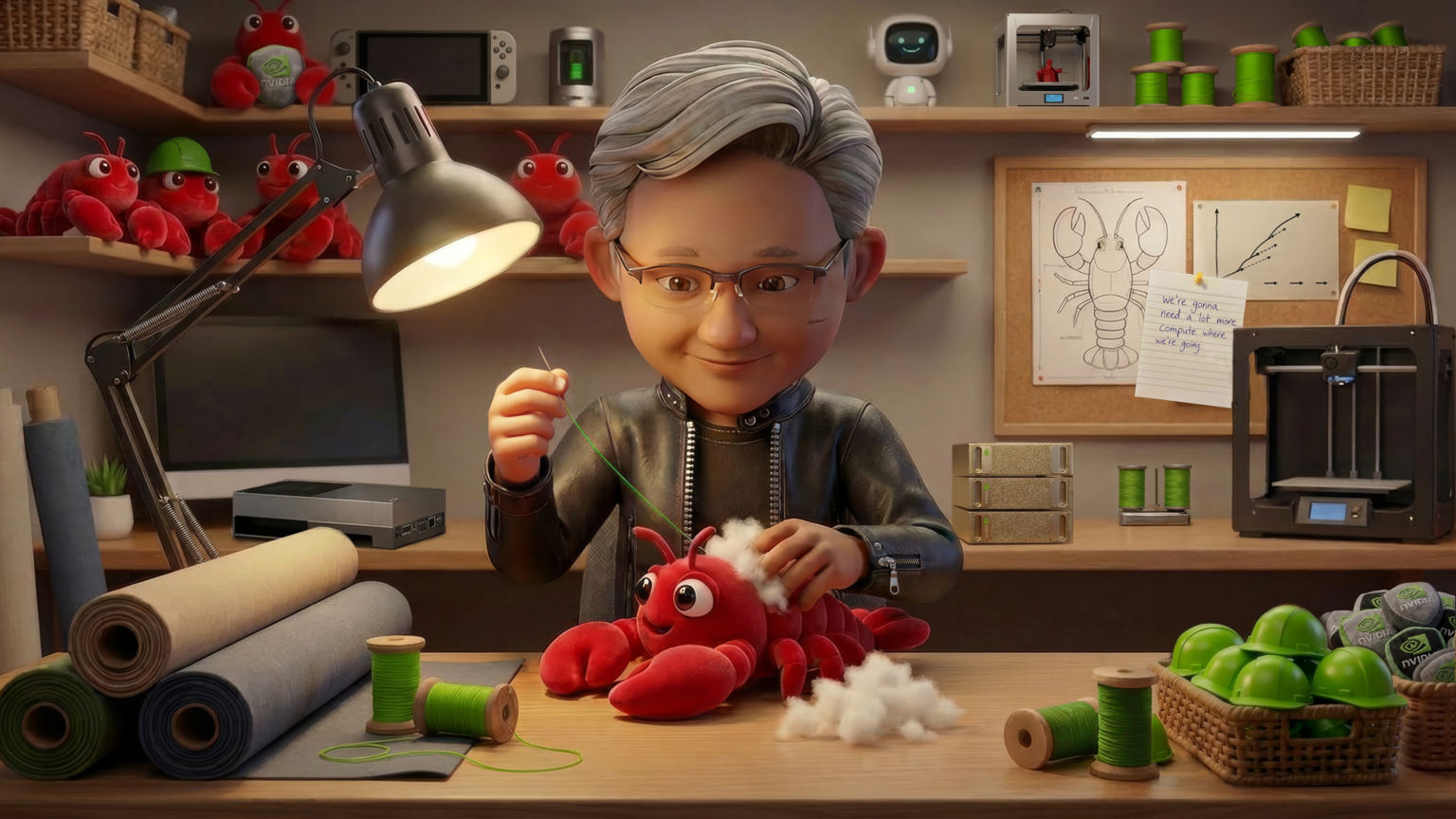
The keynote kept widening from there. Nvidia launched Dynamo 1.0, open-source software for generative and agentic inference at scale, and introduced NemoClaw, its own alternative for the OpenClaw community. With these announcements Nvidia is trying to plant itself under the software layer along with the hardware.
Also read: Anthropic has raised Claude’s limits while the fight over AI power escalated
In the end, the company tied that pitch to robotics, industrial software, AI-factory blueprints and distributed edge networks with T-Mobile and Nokia. In other words, the keynote was not really asking people to imagine better chatbots. It was asking them to imagine AI moving deeper into factories, networks and machines.
Y. Anush Reddy is a contributor to this blog.