Nvidia Opens Weather AI for Faster and Cheaper Weather Forecasts

What Nvidia is doing is taking a two-week forecast and turning it into something usable, rather than just a lab experiment. They’re treating the whole stack as something you can run, tweak, and scale, rather than having to wait for a special slot on a supercomputer.
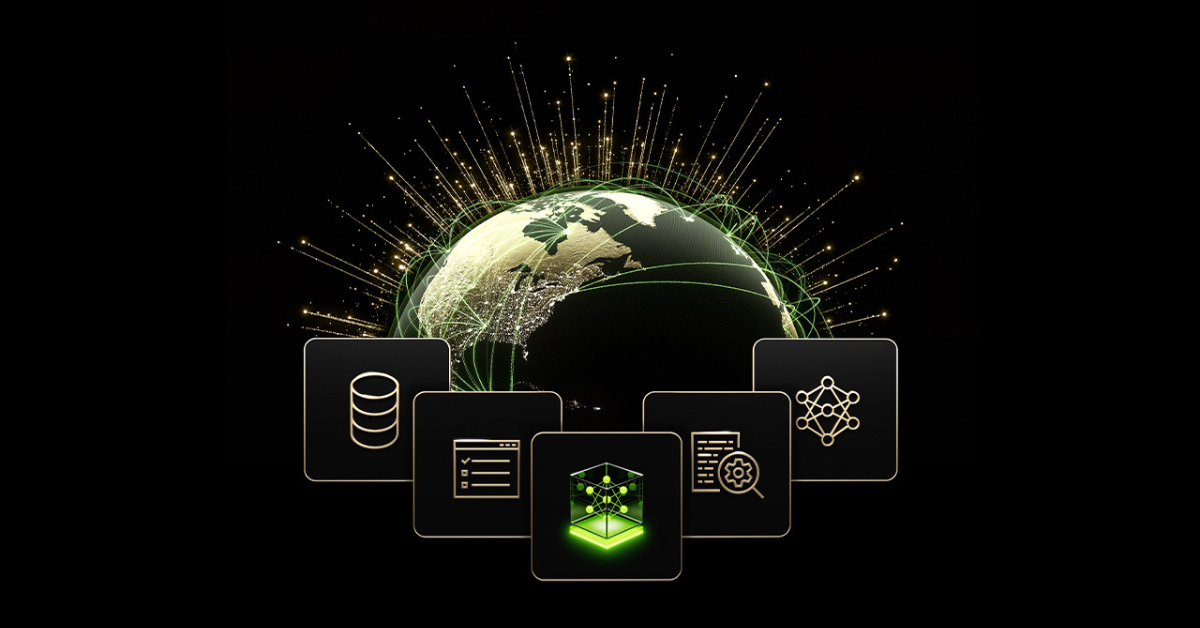
On Monday, January 26th, Nvidia announced the new Earth-2 family of models, libraries, and frameworks that provide a completely open, accelerated weather AI software stack.
The pitch is that there are three models, each solving one of the three hard problems in weather prediction: global medium-range prediction, short-term storm prediction, and turning raw observations into a useful starting point. Two models are available now, and the third is coming later.
What’s Available in the Earth-2 Stack Now
Earth-2 Medium Range is the global prediction model, covering the 15-day forecast. It’s powered by Nvidia’s new Atlas architecture. Its purpose is to forecast up to 15 days in the future for 70+ weather variables.
Earth-2 Nowcasting is the model used to predict storms, powered by StormScope. Its purpose is to provide kilometer-scale, 0-to-6-hour hazardous weather forecasts using generative AI. Nvidia’s StormScope model card describes it as a mesoscale model that autoregressively predicts satellite and radar variables.
Earth-2 Global Data Assimilation is the piece that creates the starting conditions, using HealDA. The goal is to generate those initial atmospheric conditions in seconds on GPUs instead of hours on a supercomputer, and it’s expected to arrive later this year.
Earth-2 also includes a downscaling tool called CorrDiff, which takes a broader forecast and sharpens it into more practical local detail.
In plain English, data goes into the model, medium-range forecasts look further ahead, downscaling sharpens it for your area, and nowcasting zooms in on the storm as it’s happening.
Speed is what matters most
The problem with forecasting isn’t getting a single number; it’s running an ensemble of many different versions to see what might happen and how crazy it can get. This is where costs explode, and where decisions are made.
According to Mike Pritchard of Nvidia, interviewed by Reuters, “Once we train it, it’s 1,000 times faster than what we have today. So, it changes the economics of what we can do with an ensemble.” Insurers can now use 10,000-member ensembles to search for extremes such as floods and hurricanes.
This is what Earth-2 is betting on: not only can AI be used for forecasting, but it can make it affordable to explore uncertainty.
Open source as a guiding principle, not a marketing slogan
Nvidia is leaning on an open approach because weather teams want to ensure a solution can be validated, refined, and integrated into their workflows.
They says that both Medium Range and Nowcasting are available as open source via Earth2Studio. Additionally, they are available on Hugging Face and GitHub. Earth2Studio is positioned as a pipeline component for developing and deploying AI workflows.
According to the Wall Street Journal, “Nvidia’s open and free approach will make it easier for people to access weather and climate-related tools and services, not just those with the most resources.”
Who is testing Earth-2 and what does it say?
Nvidia has a list of organizations in weather, energy, insurance, and risk, which says a lot about accessibility.
Agencies: U.S. National Weather Service, Taiwan’s Central Weather Administration, Israel Meteorological Service
Commercial: The Weather Company, TotalEnergies, Eni
Even though StormScope is the new short-term tool, the Israel Meteorological Service is already using CorrDiff. Next, they plan to roll out Nowcasting, and Nvidia says it should cut compute time a lot—especially for high-resolution models.
The unspoken truth behind democratized forecasting
It’s open models, but it’s still data centers, electricity, and hardware.
With that in mind, the timing of the following announcement becomes relevant. Nvidia announced that it would be investing $2 billion into CoreWeave, with reports suggesting that the funds will be used to accelerate the procurement of land and power for new AI data centers.
What Earth-2 means for the big picture
Earth-2 isn’t a single weather model; it’s a move. Nvidia is turning the whole forecasting stack into a modular, GPU-native pipeline, so different groups can use the same building blocks, plug in their own data, and scale up ensembles without needing a traditional supercomputer.
The key detail is that the stack is being pulled in two directions at once: medium-range global forecasting and storm-scale nowcasting are happening side-by-side.
Y. Anush Reddy is a contributor to this blog.