Why McDonald’s AI Holiday Ad Sparked Controversy

Holiday advertising is normally where brands borrow your trust, not gamble with it. But recently the AI-generated Christmas commercials are changing the temptation curve: faster iteration, fewer traditional constraints, and a chance to look cutting-edge in the highest-emotion month of the year. The risk is that audiences now read “AI holiday ad” as a test of trust and they don’t always like feeling like the test subject.
That’s why this week’s controversy didn’t land as a small creative stumble; rather, as a warning about how generative AI advertising can collide with brand warmth.
The Backlash: Inside McDonald’s “Terrible” AI Campaign
On December 1st 2025, McDonald’s Netherlands released a 45-second holiday ad: “It’s the most terrible time of the year.” The work was created by TBWA\NEBOKO and produced with The Sweetshop and its AI division The Gardening.club.
The ad reframes December as exhausting rather than magical. It shows AI-generated people slogging through the familiar seasonal chaos, overloaded family moments, shopping stress, and decorations going wrong before making the pitch that you can essentially hide out in McDonald’s until January.
The backlash was so instantaneous that McDonald’s reportedly restricted the video and then pulled or de-listed it from YouTube as criticism mounted.
Two issues drove the reaction.
First, the tone gap. In place of that reassuring “we get how stressful December can be,” many viewers simply heard a far chillier message: Christmas is awful, so opt out and come to us instead. For a family-friendly brand, that shift in emotional posture can feel jarring when the audiences expect reassurance.
Second, the realism choice. The ad used human-like AI characters, which puts any minor visual error into uncanny territory. When the faces and motions feel just a little wrong, the audience stops evaluating the joke and starts evaluating the technology. That’s a tough trade for a holiday ad where emotions are the product.

The Strategy: Why McDonald’s Thought This Would Work
The foundation wasn’t random.
According to futurism reporting, the campaign was informed by local research that suggested many Dutch consumers feel December is overloaded and that they want more time for themselves, which aligns with McDonald’s Netherlands’ platform positioning the brand as a small break during a hectic month.
In that light, the strategy makes sense: validate the stress, then offer an easy refuge.
What got broken was the emotional translation. The insight was relatable; the delivery was sharper than the brand’s usual holiday role.
The Cost Surprise: Why This AI Ad Was Not Cheap
This is the detail that flips the story from “AI ad goes weird” to “AI advertising gets tested.”
Statements cited in coverage said leadership of The Sweetshop estimated the production required about ten people full-time for over five weeks. They argued the overall man-hours exceeded a traditional shoot. One account described roughly seven intense weeks of iteration, with thousands of takes generated and honed before the final edit.
That matters because the public narrative often assumes that AI ad = cheap, fast, low effort.
This campaign suggests that the opposite can be the case when a brand strives for broadcast-level polish with realistic humans. You can spend serious time and talent and still trigger a reputational hit if tone is not correct.
Coca-Cola and the 2025 AI Holiday Wave
McDonald’s also launched this campaign during a season already sensitive to AI.
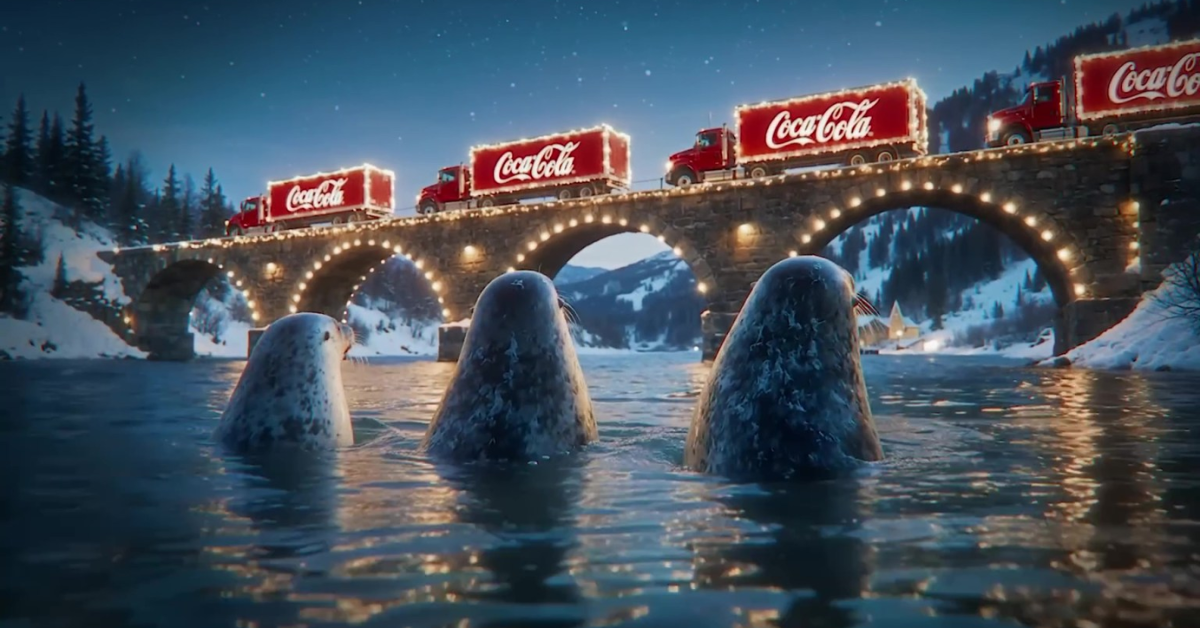
The 2025 AI holiday ad from Coca-Cola had their own share of criticism over emotional authenticity and whether generative visuals can have any nostalgic feel without being synthetic. Against that backdrop, patience was likely thin for another major AI holiday experiment.
Why This One Will Stick
Even after the ad disappeared from official channels, people didn’t stop talking about it. And that’s because this wasn’t just a visual mistake. It turned into a public test of something bigger: how a global brand can use AI to deliver a holiday message.
Another important detail is the work behind this whole production. If this campaign really took weeks of intense effort and needed lots of specialists, then the backlash isn’t only about the creative choice. It also challenges a bigger belief, that AI will automatically make big brand storytelling easier, safer, or cheaper.
McDonald’s Netherlands started with a believable idea about how drained people feel in December. But the internet’s reaction shows how quickly that kind of insight can get buried if the ad feels even slightly off or less real than people want it to be. For audiences, this ad will likely stick as shorthand for a new 2025 truth about AI advertising: the tech may be powerful, but people’s emotional patience for mistakes is getting brutally small.
Y. Anush Reddy is a contributor to this blog.