OpenAI Declares ‘Code Red’ as Google Gains Ground

During most of the AI boom, OpenAI was clearly unbeatable. ChatGPT was the tool of choice for composing emails, debugging code, writing contracts, and planning campaigns, with everyone else playing catch-up. But now the tables have turned enough that Sam Altman, for the first time, has told his own team that the top spot is in jeopardy.
On December 1, Altman sent a note within the company declaring a "code red" for ChatGPT, as reported in the Wall Street Journal and The Information. The plain truth is this: OpenAI is pausing new products to pour all its effort into the basic chat experience speed, reliability, and usefulness, until Google’s momentum is checked.
OpenAI Is Used by Nearly 3x as Many People, but Google Is Catching Up
In outright usage, OpenAI is still in a different ballpark. Altman has reported that some 800 million users interact with ChatGPT every week, while Google boasts 650 million monthly users for its Gemini application. To give you some scale, that’s probably well over a billion users for OpenAI on a monthly basis. There’s a huge difference, but the gap is closing quick enough that OpenAI simply can’t coast.
"Code red" appears to be the highest level of a series of urgency warnings, stretching from yellow to orange to red. Following a "code orange" alert last October, Nick Turley, the executive responsible for ChatGPT, warned employees that the firm was facing "the most severe competitive pressure we’ve ever seen" due to the negative effects of a "safer but flatter" model.
The ‘Code Red’ Kills the Cool Stuff
Altman’s memo swings from threats to priorities. Rather than trying to deliver everything at once, OpenAI is essentially freezing the nonessentials. Pulse, the proactive assistant OpenAI rolled out earlier this year that looked ahead at your calendar to pull tasks together, is already being bumped.
The shopping bots that would help you find sneakers or compare gadgets are no longer a priority. Even the advertising solutions meant to run within the free ChatGPT experience will be delayed so developers can work on the bugs, latency, and hallucinations that regular users encounter daily.
For people writing sales copy, creating slide decks, writing briefs, or analyzing customer data, this is the essence of ‘code red.’ It means OpenAI is now clearly focusing on quality within the chat box as opposed to new surfaces. If you live inside the chat box, that’s where they want to win.
Google’s Gemini 3 Translates Benchmarks into ‘Real Pressure’
The timing isn't accidental. Back in November, Google released its newest flagship, Gemini 3, with real testing, not just branding.
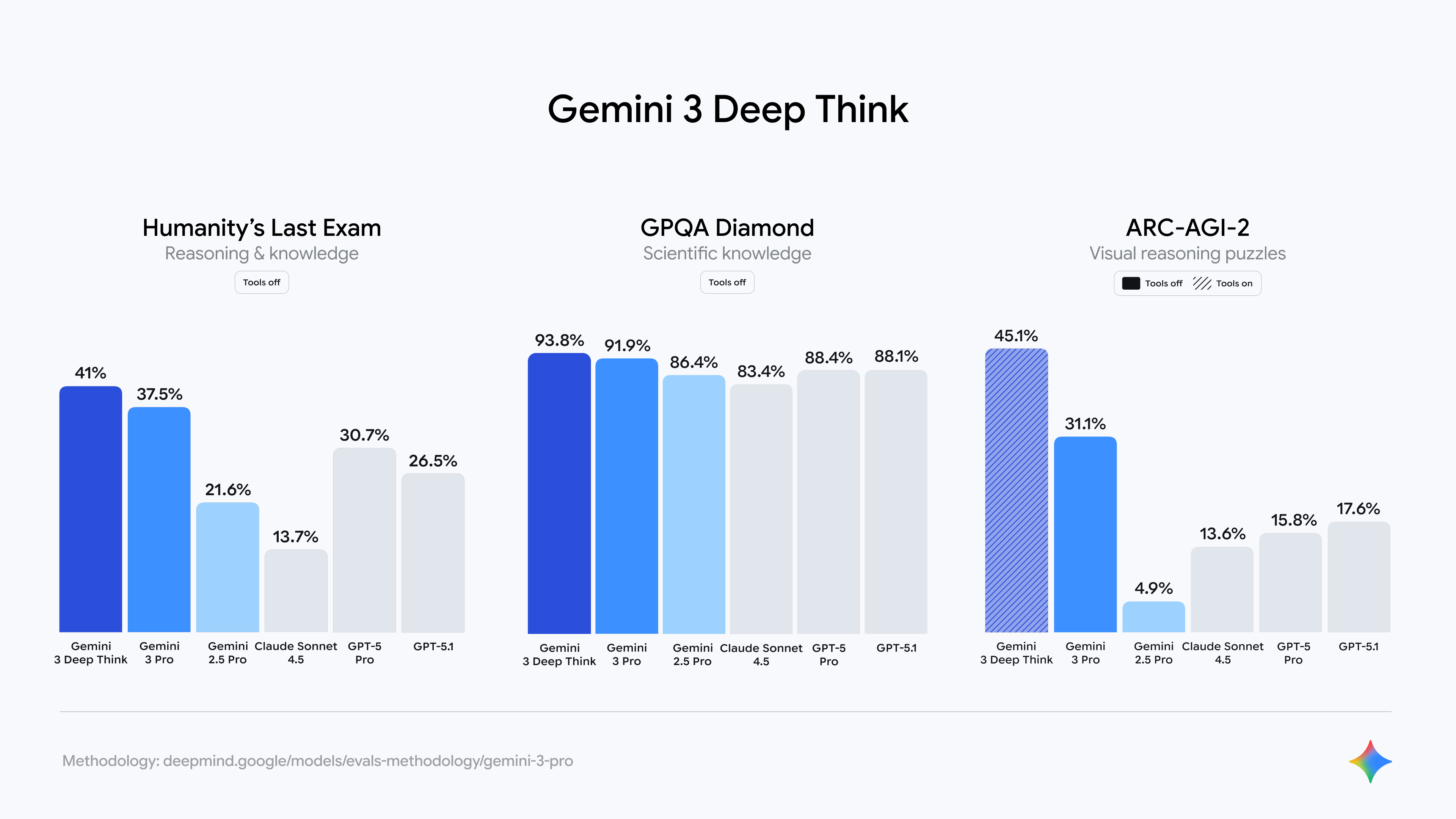
On public "arena" sites where users can pit models against one another and vote on the best response, Gemini 3 is currently number one. On coding challenges built from real GitHub issues and command-line problems, it gets more done end-to-end than many of its competitors. This is big for coders and analysts, as it means fewer do-overs and more "just did exactly what I asked" moments.
It’s not just Google. Claude Opus 4.5 from Anthropic has been winning against both Gemini and the newest models from OpenAI on challenging agentic tasks like SWE-bench Verified. Influential users, such as Salesforce CEO Marc Benioff, have reported that they’re now using Gemini for their own workloads with no plans to revert. Such experiences, although anecdotal, affect which tools get selected for pilot projects in sales, marketing, law, and ops.
Trillion-Dollar Bets Riding on One Chat Window
What’s going on under the hood is much more than mere bragging rights. With a valuation of some $500 billion, OpenAI is not yet profitable, though it’s committed to spending well over $1 trillion in cloud and chip infrastructureover the long term through partnerships with Microsoft.
Such infrastructure isn’t worth much if the company can’t continue its usage growth, which allows that usage to be monetized. This is exactly why the recent memo is so telling. The firm is assuring that the product users interact with every day is strong enough to defend those long-term bets.
However, Altman’s memo isn’t entirely defensive. According to reports, he told employees that a new model with a focus on reasoning will arrive soon, and that it already performs better than Gemini 3 in testing. If that’s the case, code red may be less of a panic button and more of a much-needed reset, getting rid of side quests so the better model can be released.
But if it falls short, this moment will be remembered as something else: the moment OpenAI realized the AI race was no longer a formality.
Y. Anush Reddy is a contributor to this blog.